
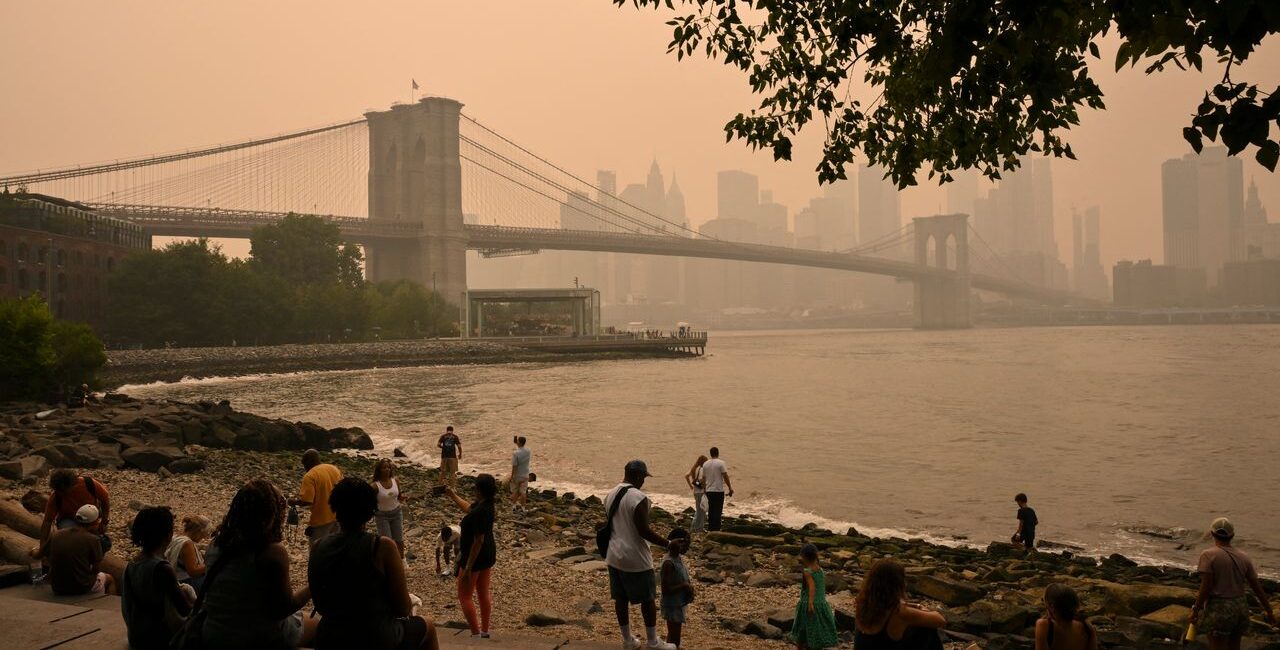
Hot dogs, beach days, and iced tea on the porch are some of the rites of summer. But in an era of global warming, a new rite has emerged: choking down smoke from wildfires burning hundreds of miles or more away.
The Midwest, Northeast, and parts of Canada have been blitzed with thick smoke that turned skies an eerie shade of orange and triggered widespread air quality alerts. The source? Fires burning in Minnesota as well as western Ontario.
Canada is where the bulk of the fires are burning, with 119 out-of-control blazes across the country as of Friday afternoon. The fires are burning so intensely that smoke is rising into the atmosphere and getting whisked on the jet stream eastward. That’s how Chicago and Detroit ended up with the worst air quality in the world on Friday. New York and Washington, DC, cracked the top 10 list, too.
The unhealthy air has cities telling residents to stay indoors and residents searching for ways to reduce their exposure to harmful wildfire smoke. While fresh air is expected to arrive in at least some locations this weekend, the fires show no signs of abating, and it could mean more smoke is in store later this summer.
Burning fossil fuels has increased the odds of destructive wildfires—and with them, more frequent smoke events. The orange-sky days hitting the East Coast this week harken back to 2023, when Canada’s worst wildfire season on record sent smoke streaming into the region. Similar scenes have played out in Europe this summer as fires rip through Spain, and we’ve seen orange skies in places as far apart as Australia and California at various times the past few years.
Research published last year shows matters are only likely to get worse unless the world winds down its use of coal, oil, and gas. The Nature study found that wildfire smoke is projected to cause 71,420 excess deaths annually by mid-century in the US alone, a 73 percent increase compared to the 2010s. Between now and then, the researchers estimate, up to 1.9 million people in the US will die due to smoke-related health issues.
Below is a look at what this week’s smoke invasion looks like. It’s almost certainly a precursor to worse outbreaks if temperatures keep rising.
Toronto, Ontario

Other Articles


No Comment! Be the first one.