
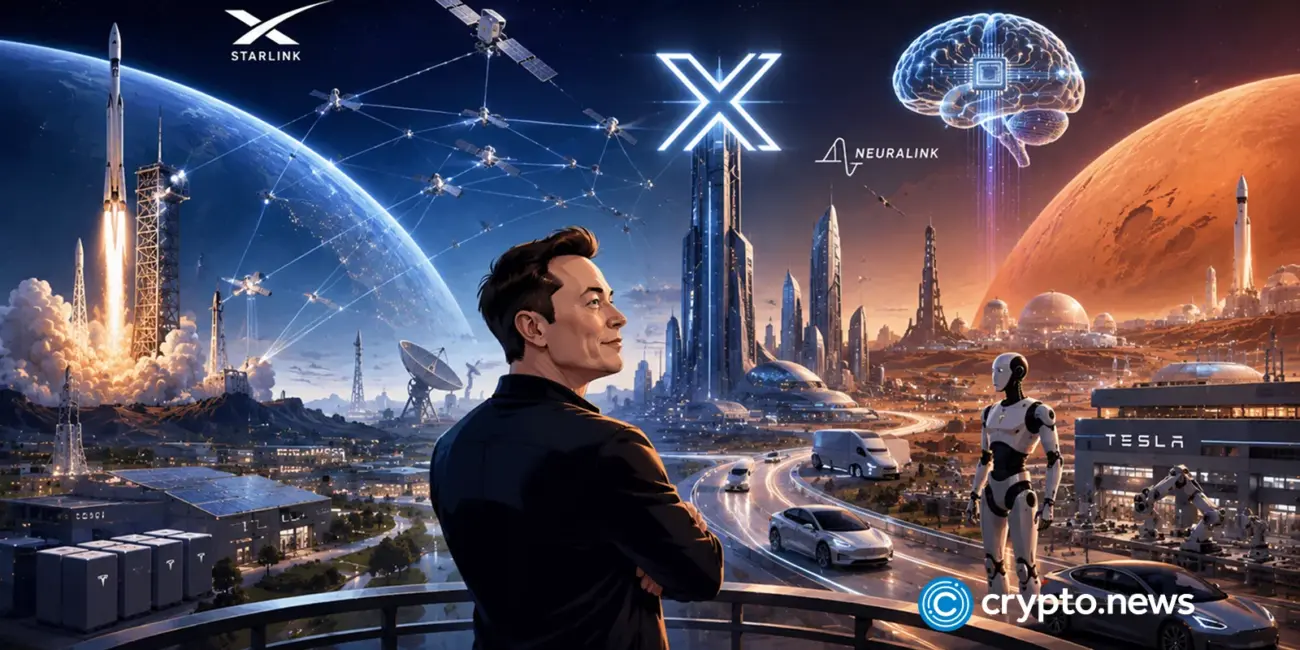
Alphabet has disclosed a $94.1 billion stake in Elon Musk’s SpaceX more than a decade after Google joined a $1 billion funding round for the rocket company.
Summary
- Alphabet disclosed a $94.1 billion SpaceX stake, equal to roughly 6% of the company.
- Google first backed SpaceX through a $1 billion funding round with Fidelity in 2015.
- SpaceX shares remain below their $135 IPO price, trimming Alphabet’s paper gains.
Alphabet’s second-quarter 10-Q filing showed that the Google parent owns roughly 6% of the newly listed company, providing the clearest public measure of an investment it previously valued using private-market estimates.
The disclosure splits the holding into about $80 billion of shares under short-term sale restrictions and another $14.1 billion subject to longer restrictions through the third quarter of 2027.
Google began building its position in January 2015, when it joined Fidelity Investments in a $1 billion financing round for SpaceX. The two investors received a combined stake of just under 10%, while the funding supported work on space transportation, reusable rockets and satellite manufacturing.
At the time, the deal valued SpaceX at about $12 billion. Reports placed Google’s contribution between $500 million and $900 million, with estimates suggesting that the company initially controlled about 7.5% of SpaceX. Its ownership percentage later fell as the rocket maker issued additional shares during subsequent fundraising rounds.
Although that dilution reduced Google’s share of the company, SpaceX’s rising valuation pushed the dollar value of the holding much higher. SpaceX used later financing to expand its Starlink satellite network, develop the Starship launch system and increase its reusable-rocket operations.
A major change came in February 2026, when SpaceX acquired Musk’s artificial intelligence company xAI. crypto.news reported earlier that the transaction valued SpaceX at $1 trillion and xAI at $250 billion, creating a combined business worth $1.25 trillion before the stock-market listing.
Under the deal’s structure, xAI became a wholly owned SpaceX subsidiary while retaining some legal separation from the parent company. The arrangement allowed investors to defer capital-gains taxes and reduced the risk that xAI’s debts or legal disputes would directly affect SpaceX.
SpaceX lockups restrict Alphabet’s exit
SpaceX priced its initial public offering at $135 per share before trading began on Nasdaq under the SPCX ticker on June 12. The company sold about 555.6 million shares and targeted roughly $75 billion in proceeds, giving it an initial valuation of around $1.75 trillion, according to its amended offering documents.
Alphabet and other early shareholders could not immediately sell most of their holdings after the debut. The restrictions disclosed in Alphabet’s quarterly filing leave the company exposed to changes in SPCX’s market price until the relevant lockup periods expire.
The listing nevertheless allowed Alphabet to replace conservative private-company estimates with a value based on publicly traded shares. Before the IPO, reports placed Alphabet’s effective ownership near 5% after years of financing rounds and adjustments linked to the xAI transaction. Its latest filing puts the stake closer to 6%.
Alphabet also recorded $98 billion in other income during the second quarter, which the company attributed mainly to unrealized gains on equity investments. While Alphabet did not identify how much came from each holding, the company owns stakes in SpaceX, Anthropic and Databricks.
Its Anthropic investment has also increased sharply in value. Anthropic announced in May that it had raised $65 billion at a $965 billion post-money valuation, while previous filings placed Google’s ownership of the AI company at about 14%. Any contribution from Anthropic or Databricks means the entire $98 billion gain cannot be assigned to SpaceX alone.
SPCX decline trims the paper windfall
SpaceX’s public-market performance has weakened since its June listing. SPCX fell to $112.88 on July 23, placing the stock about 16% below its $135 IPO price despite Tesla’s second-quarter results and another planned Starship launch attempt.
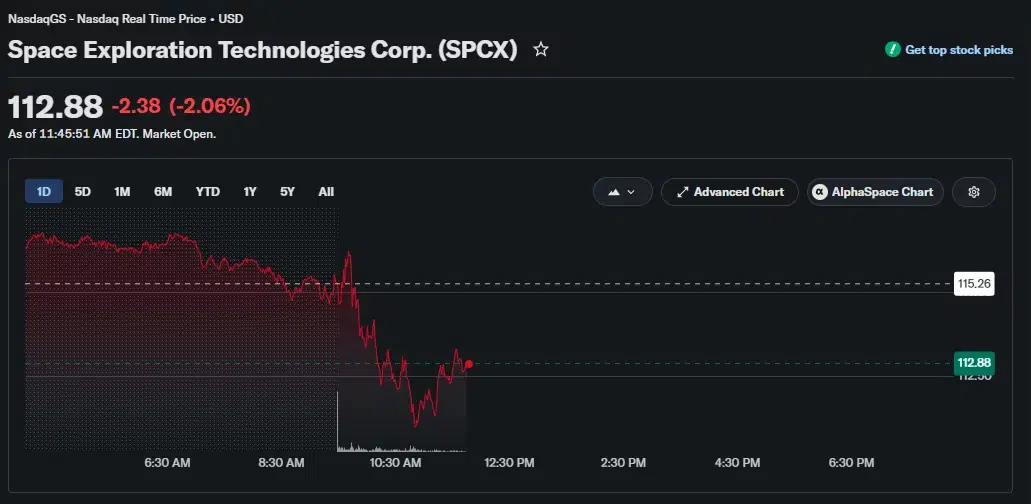
The decline followed a sharp post-listing rally that carried SpaceX shares above $225. Based on the July 23 market price, the company’s valuation had dropped to roughly $1.52 trillion. Alphabet’s disclosed holding therefore remains subject to further paper gains or losses while its shares stay locked.
Musk’s other publicly traded company added another source of investor attention. Tesla reported that it kept its 11,509 Bitcoin reserve unchanged during the second quarter while recording a $112 million after-tax loss on digital assets. At a Bitcoin price near $65,840 after Tesla’s earnings release, the reserve was worth about $758 million.
For Alphabet, however, the SpaceX filing has placed a firm public figure on one of its longest-held private investments. A position built through the 2015 financing round is now worth $94.1 billion on paper, even after SPCX erased its early post-IPO gains.

Other Articles
Active XRP Ledger addresses down 80% since December

No Comment! Be the first one.