
Key Takeaways
- Roughnecks mined just 4 BIP-110 blocks after Bitcoin split at block 961632 on Aug. 8.
- BIP-110 has 400,000+ transfers waiting, with zero exchange support or market price. A great deal of those transfers are accidental.
- BIP-110 backers plan a September Blake2b PoW shift to escape SHA-256 difficulty.
What Happened?
The BIP-110 faction broke from the main Bitcoin network and managed to grind out a microscopic four-block chain tip. That would normally kill a fork cold, but BIP-110 proponents have another escape route: ditch the minority chain’s crushing SHA-256 difficulty by replacing its PoW cryptographic hash function entirely. Word on the street is that the PoW switch could land in September.
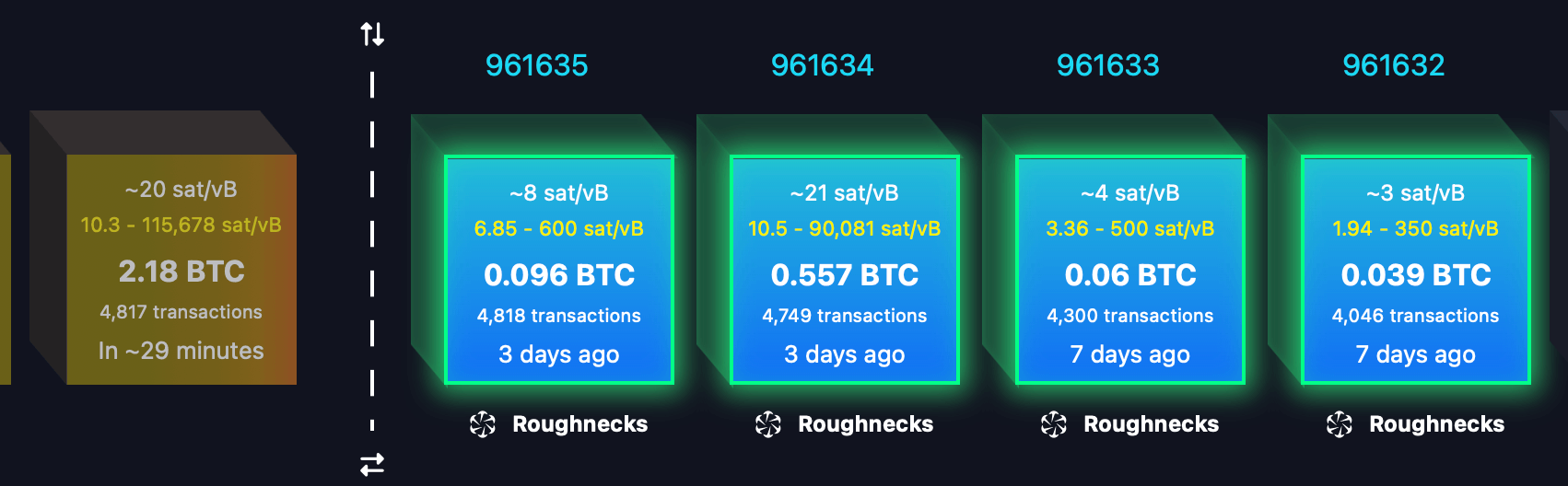
As of today, Roughnecks had dragged the minority chain to block 961635, only for it to stall again after that block was mined three days ago on Aug. 12. Block 961636 has since accumulated a staggering pile of fees, but with virtually zero exchange support, nobody can put a credible price on the BIP-110 forked asset and how much those fees would be worth.
The Plan: Blake2b
BIP-110 proponents, including Ocean co-founder Luke Dashjr, say the minority chain will swap its PoW from SHA-256 to Blake2b. The choice reportedly emerged from a randomized handful of PoW hash functions and algorithms. Importantly, replacing the minority chain’s PoW hash function does not invent or adopt an entirely new consensus mechanism.
The original Blake dates to 2008, while Blake2 arrived on Dec. 21, 2012, from Christian Winnerlein, Jean-Philippe Aumasson, Samuel Neves and Zcash founder Zooko Wilcox-O’Hearn. Blake2b is the optimized 64-bit variant of the primitive, built for higher performance on modern processors. Blake2b was engineered to outrun SHA-256 on modern 64-bit processors while still targeting an equivalent or stronger level of cryptographic security.
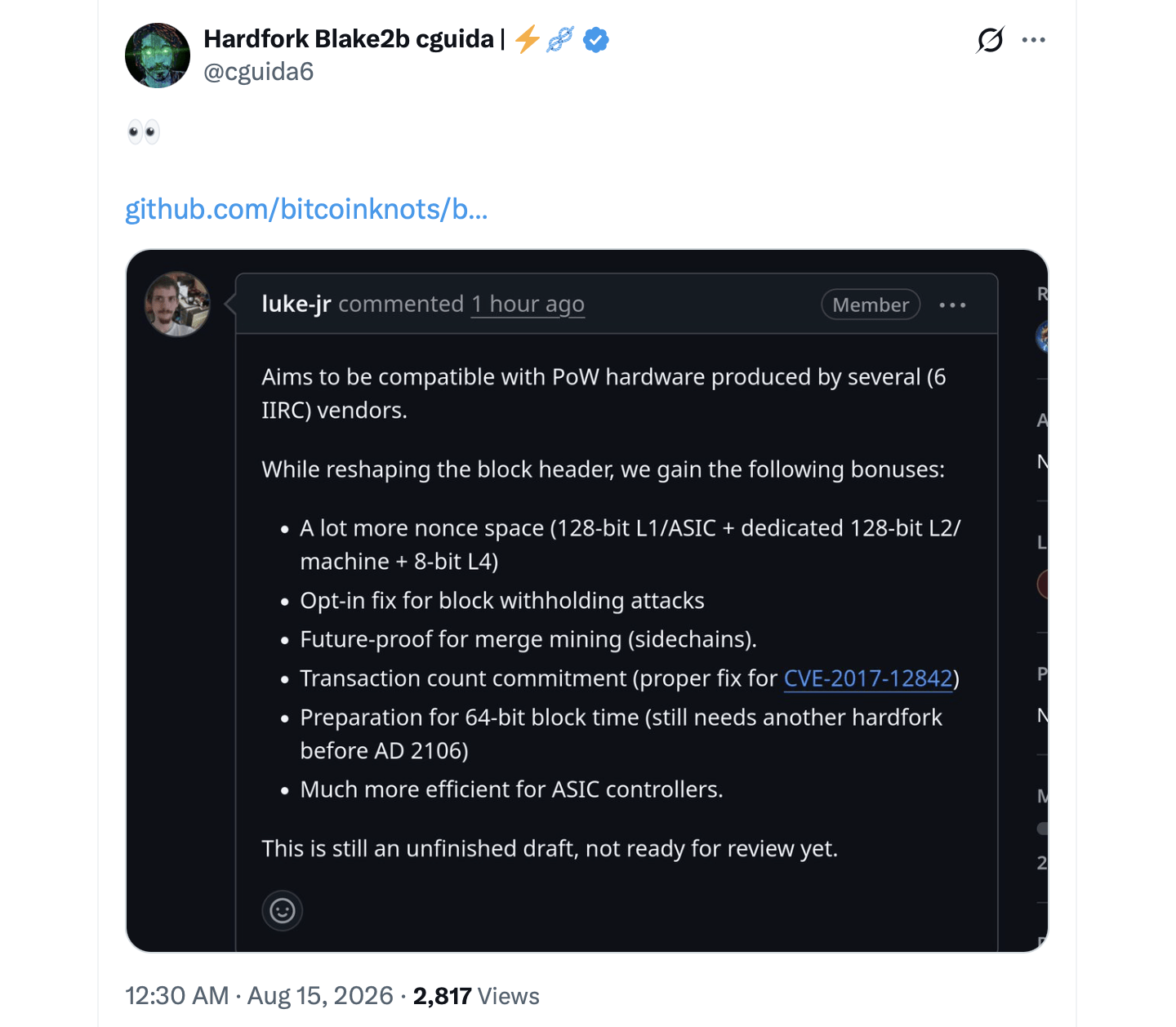
As a Nakamoto-consensus mining primitive, Blake2b has seen relatively limited adoption, powering Siacoin and only a small handful of other PoW blockchains. To make Blake2b work, BIP-110 developers must rewrite header validation and bolt the new PoW check into the minority chain. Mining software, Stratum servers, and pool infrastructure must all understand the revised header and hash function.
Explorers, wallets, and indexing tools also need upgrades to recognize the altered chain and its tokens. Miners, meanwhile, need hardware or software capable of crunching Blake2b efficiently. It is a massive undertaking, but backers appear determined to push it through.
No Exchange Means No Price for the New Coin
BIP-110’s forked coin has yet to land on a single exchange. There is no bid, no ask and no liquid market capable of discovering a credible price. Coins mined by Roughnecks cannot be spent until 100 confirmations under current rules. For now, transfers are largely limited to holders who know how to split their coins safely, and users unknowingly sending BIP-110 coins because the fork lacks replay protection.
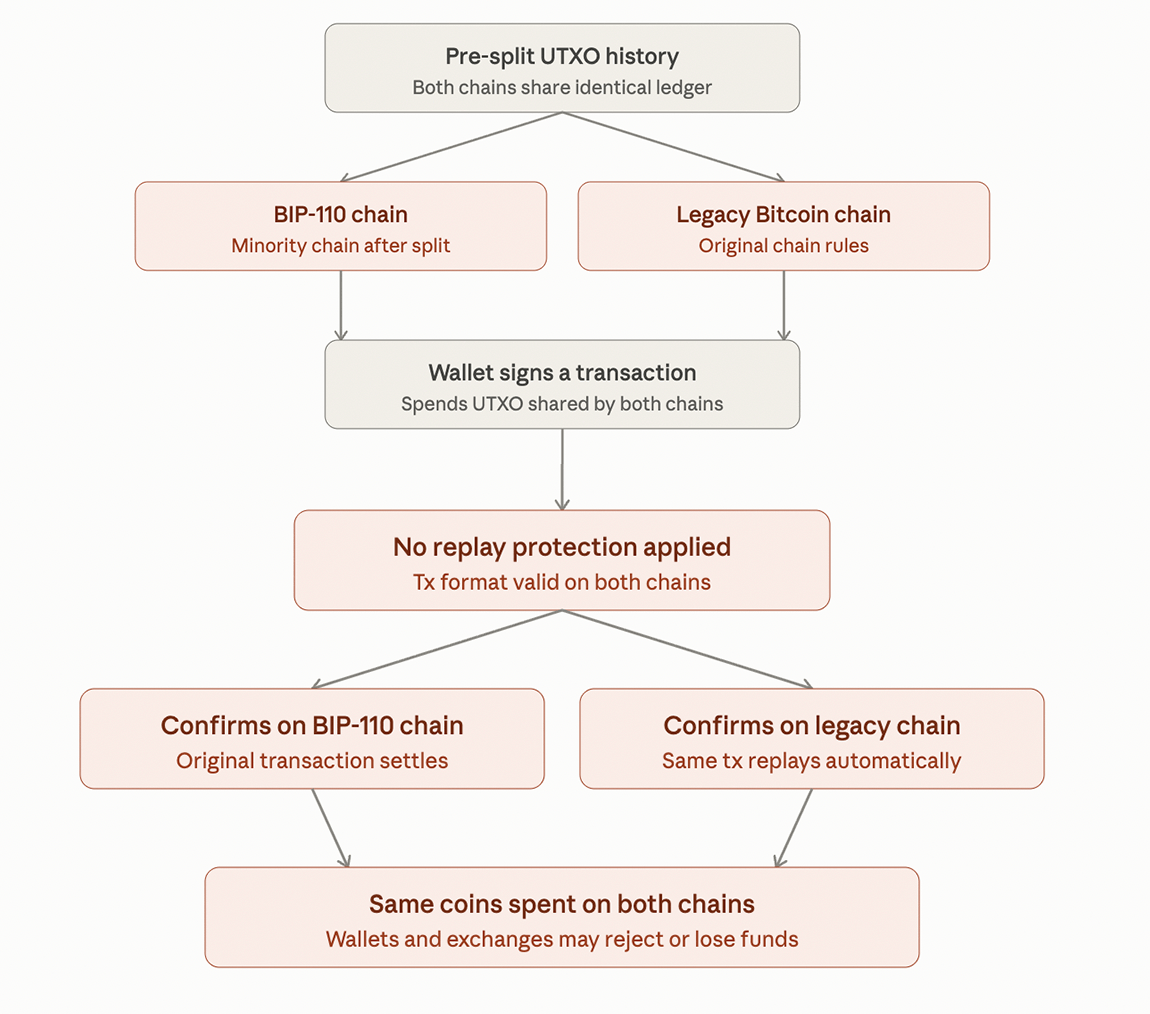
As of this weekend, well over 400,000 transfers are piled up waiting for a minority-chain block and confirmations. With the fork frozen after just four blocks, that backlog is not clearing anytime soon. With virtually no economic incentive behind it, supporters of the minority chain are already facing a brutal uphill fight. The fork has attracted perhaps the thinnest industry infrastructure support since the 2017 fork frenzy, when dozens of breakaway coins still managed to secure recognition from major wallets and exchanges.
That has not happened here whatsoever, leaving the crypto community to watch what comes next. The real test arrives if BIP-110 proponents actually abandon SHA-256 for Blake2b, reset the crushing difficulty, and finally add proper replay protection.

Other Articles

Is $2K Still Possible After ETH Drops Below $1.9K?

No Comment! Be the first one.