
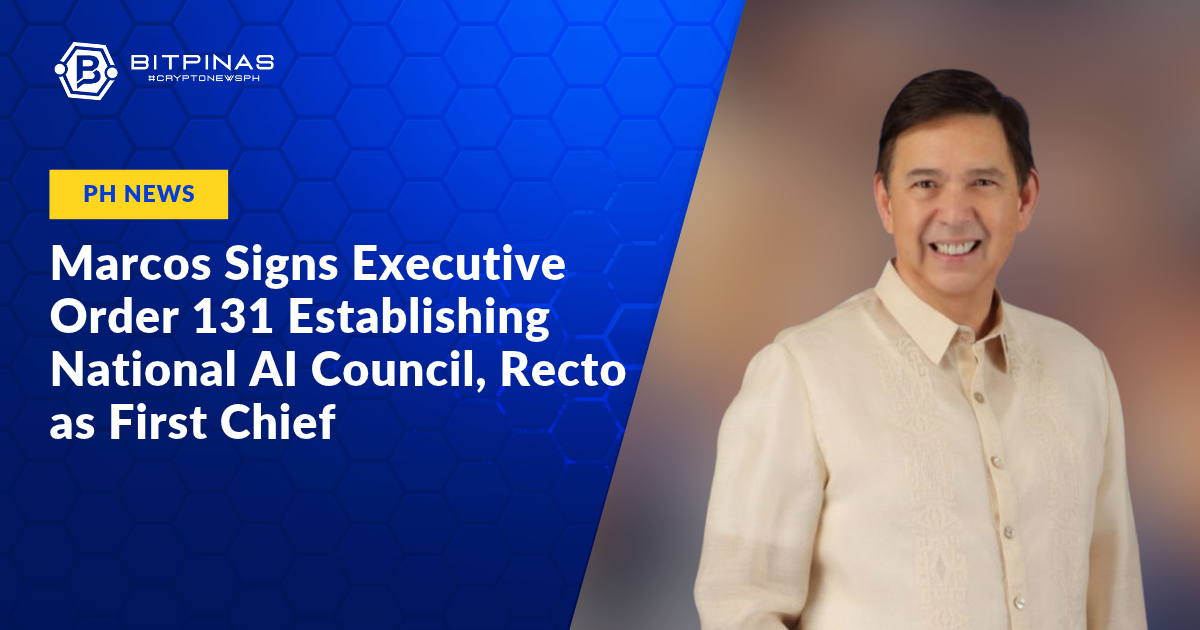
President Ferdinand Marcos Jr. signed Executive Order 131 on Nov. 12, creating an inter-agency council chaired by Executive Secretary Ralph Recto to oversee the rollout of the country’s first national artificial intelligence governance framework.
The directive establishes the National Artificial Intelligence Council (NAIC), which reports directly to the president and assumes central authority over coordinating, facilitating and monitoring government AI programs. Under the order, the council will align state initiatives, eliminate overlapping projects across agencies and resolve regulatory or resource bottlenecks.
Council Structure and Leadership

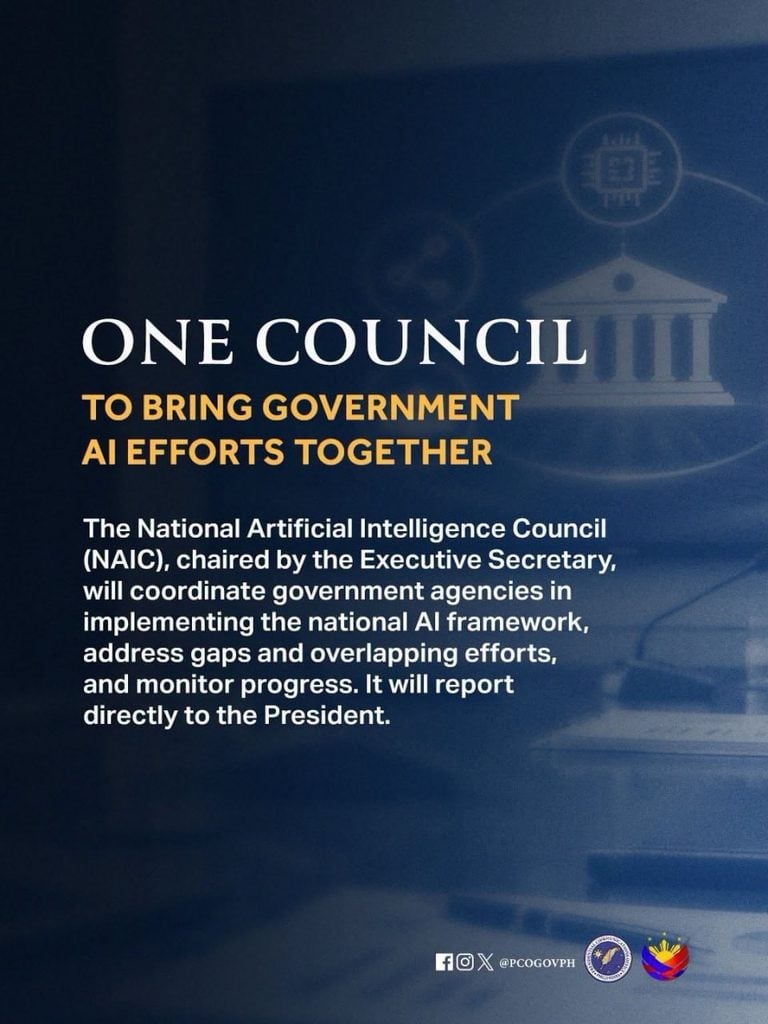
Recto will lead the 12-member council in his capacity as executive secretary, while the secretary of the Department of Economy, Planning and Development (DEPDev) serves as vice chairperson. DEPDev also acts as the council’s secretariat and must form an interim secretariat within 30 days of the order taking effect while submitting a permanent staffing plan to the Department of Budget and Management.
Nine other cabinet-level officials sit on the council: the secretaries of information and communications technology, science and technology, trade and industry, finance, education, labor and employment, and budget and management, alongside the chairperson of the Commission on Higher Education and the director general of the Technical Education and Skills Development Authority. (Read More: AI Layoff Bill: Erwin Tulfo Files Senate Measure to Shield Philippine Workers from Automation)
The president will also appoint one private-sector representative from nominees submitted by recognized business groups to serve a three-year term, with eligibility for one reappointment. Council members may designate permanent alternates holding a rank no lower than assistant secretary, and the body may invite local government units, state universities, government corporations, academe and civil society groups as resource persons.
Mandate and Working Groups
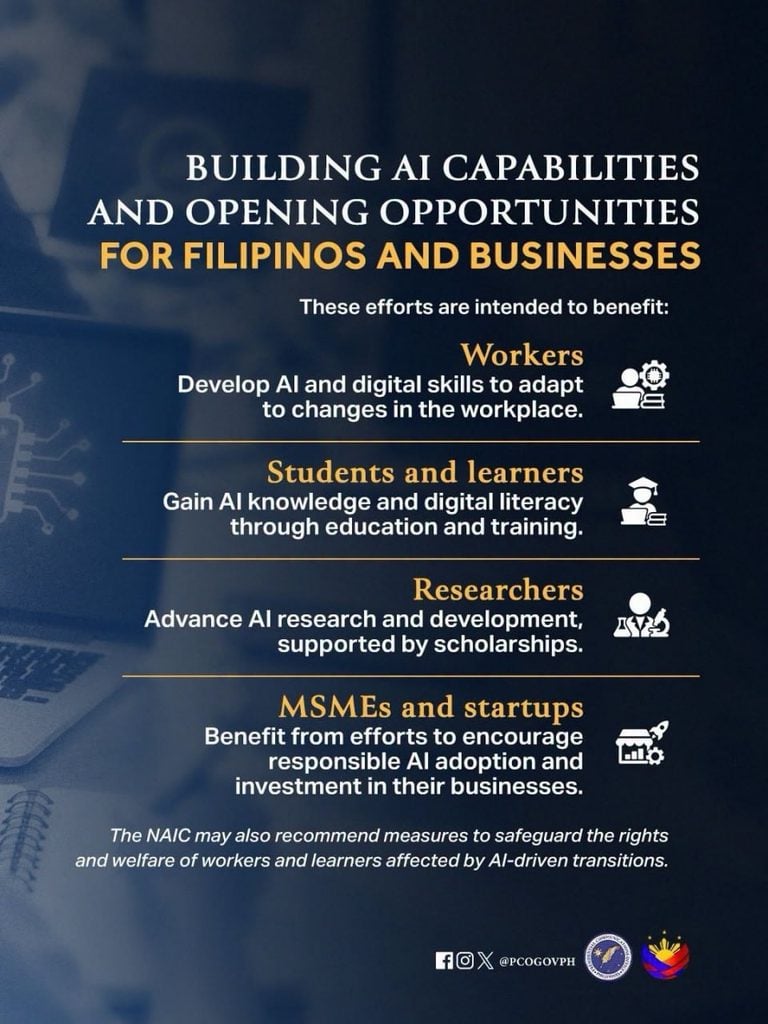
Executive Order 131 tasks the council with recommending policy, fiscal, regulatory and legislative measures to accelerate AI adoption while protecting workers and learners affected by automation. The body will also pursue international partnerships and private-sector collaboration to strengthen domestic AI infrastructure and supply chains.
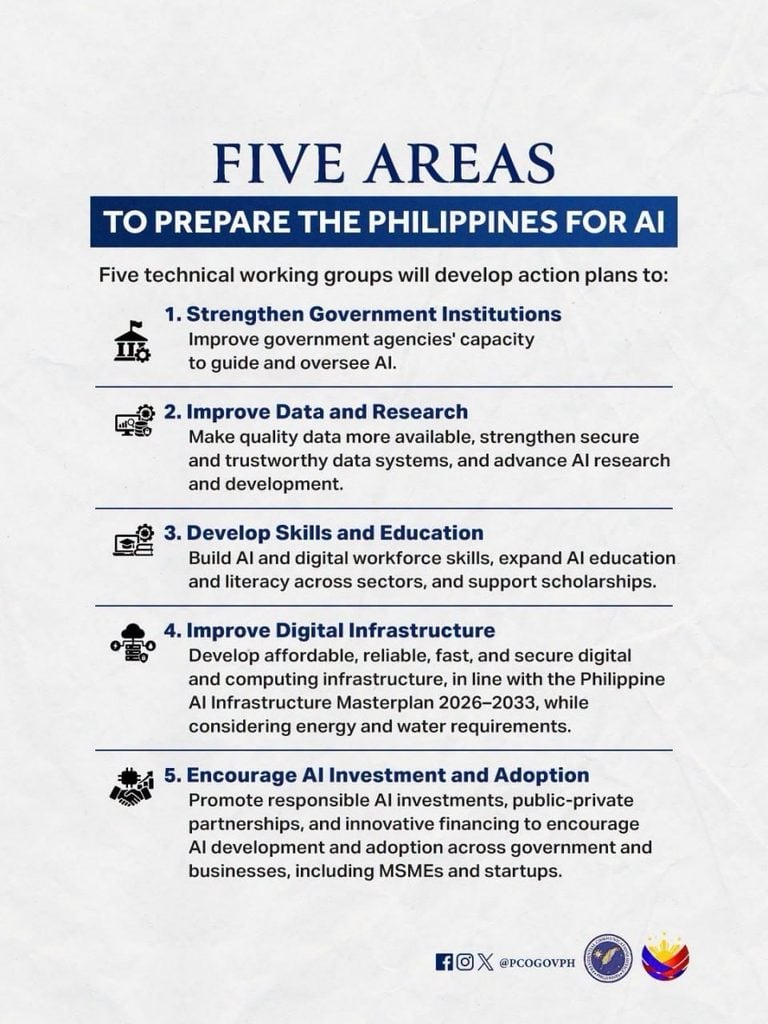
To execute its mandate, the council will organize five technical working groups to draft action plans with specific deliverables, timelines and key performance indicators:
- Institutions: Strengthens government agency capacity to oversee and govern AI.
- Data and Research and Development: Advances local AI research, improves dataset availability and builds secure, interoperable data systems under existing privacy laws.
- Capabilities: Establishes a national AI competency and digital workforce program, expands AI literacy across sectors and institutionalizes research scholarships.
- Infrastructure: Aligns digital and computing infrastructure investments with the Philippines AI+ Infrastructure Masterplan 2026–2033 while integrating energy and water requirements into national resource planning.
- Demand Generation: Mainstreams AI investments into public budgets, mobilizes public-private partnerships and expands financing for startups and micro, small and medium enterprises.
Quarterly Monitoring and Policy Framework
The order directs the Department of Information and Communications Technology to build a digital platform to track agency deliverables and milestones. Concerned agencies must submit quarterly updates through the system, and the council must submit a consolidated progress report to the president within 30 days after each quarter ends. (Read More: DOST Builds Homegrown AI ‘Itanong’ as Senate Flags Cultural Risks in Foreign Models)
Initial funding for the council will come from existing appropriations of member agencies and sources identified by the budget department, with future allocations integrated into regular agency budget proposals. The council must review the governance framework at least once every two years, or earlier if technological or market shifts require adjustments.
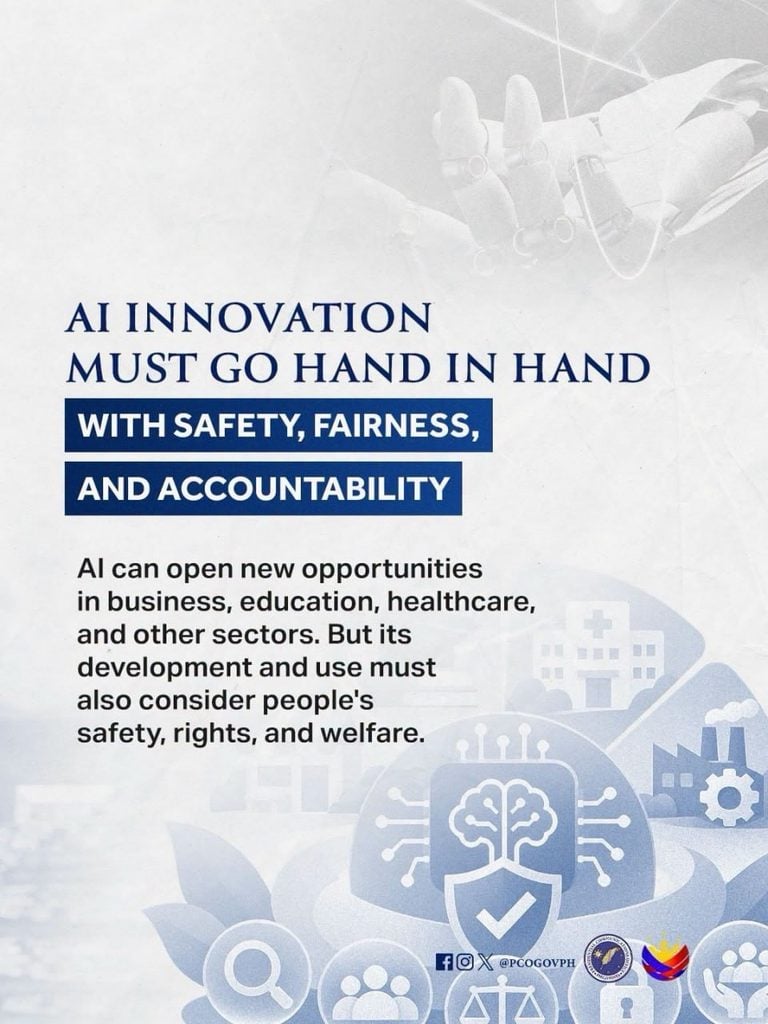
Alongside creating the council, Executive Order 131 formally adopts the AI Governance Framework for the Philippines. The framework rests on four interconnected elements: ethics and principles covering safety, fairness and accountability; technical standards and conformity assessments; a risk-based policy toolkit utilizing regulatory sandboxes, impact assessments and grievance mechanisms while preserving existing sector regulators’ mandates; and enabling resources.
Background
Executive Order 131 operationalizes the National Artificial Intelligence Strategy for the Philippines, which the government approved in May 2025, as well as the AI Governance Framework subsequently endorsed by the National Innovation Council. The issuance also aligns with Chapter 8 of the Philippine Development Plan 2023–2028 on advancing research, development, technology and innovation. The order takes effect immediately upon publication in the Official Gazette or a newspaper of general circulation.
Disclosure: AI has been used to assist in developing this article.
This article is published on BitPInas: Marcos Signs Executive Order 131 Establishing National AI Council, Governance Framework
What else is happening in Crypto Philippines and beyond:

Other Articles

Skip the Microsoft 365 subscription with Office 2024 for $103.99
Sam Altman ChatGPT AI Predicts a Super Bullish Reversal for BTC

No Comment! Be the first one.