

Key Takeaways
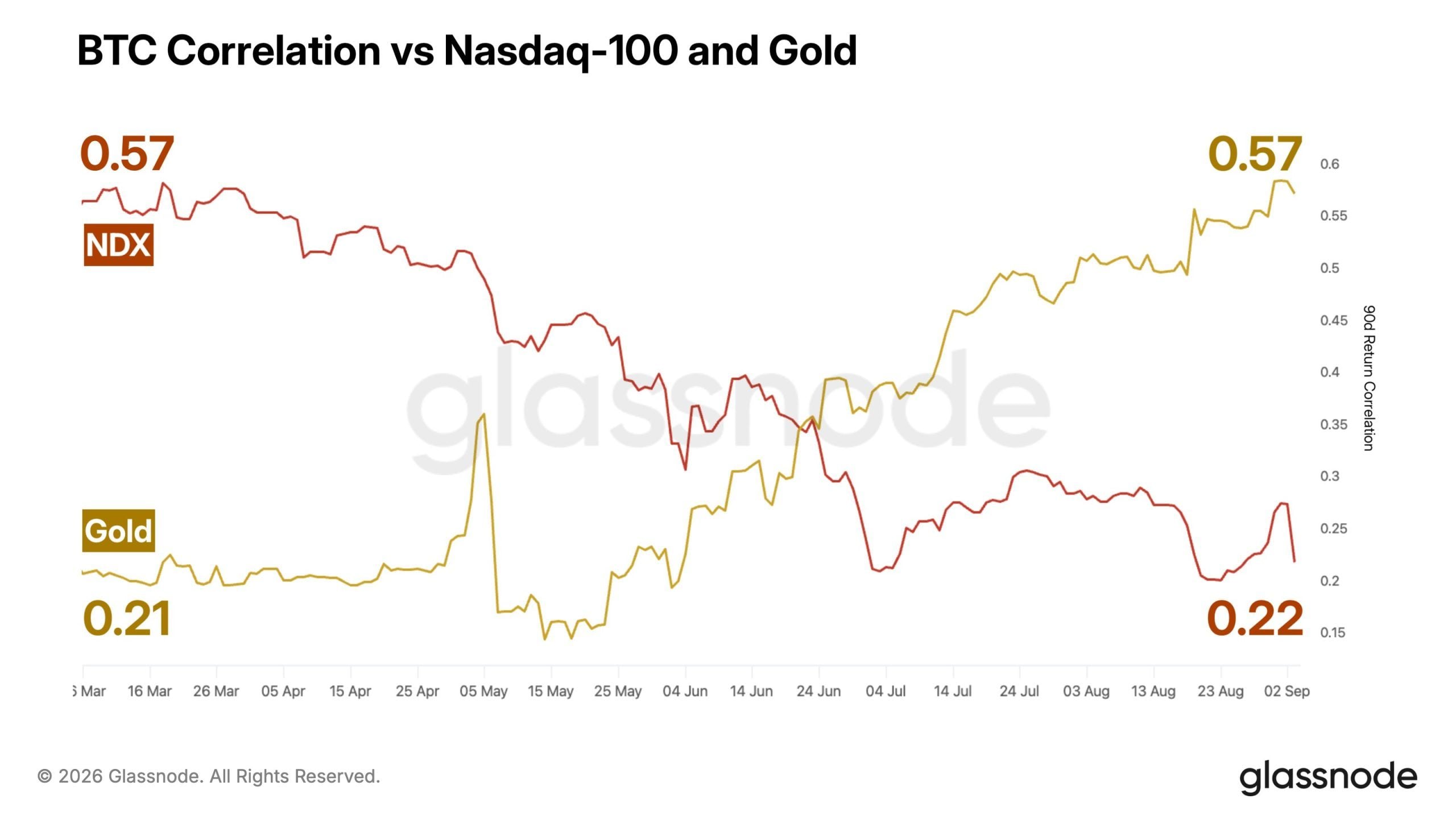
- Bitcoin’s 90-day gold correlation rose to 0.57 as Nasdaq-100 correlation fell to 0.22.
- Cathie Wood says the shift supports bitcoin’s case as a maturing monetary asset, not just a tech trade.
- A break above $83,000 could confirm the shift; failure may revive pullback risk.
Bitcoin-Gold Correlation Climbs as Treasury Sensitivity Weakens
Bitcoin’s price is behaving less like the Nasdaq and more like gold, a shift that could have major implications for how investors value the world’s largest cryptocurrency.
Glassnode data shows bitcoin’s 90-day correlation with gold has climbed to about 0.57, from 0.21 in March. Over the same period, its correlation with the Nasdaq-100 fell to 0.22 from 0.57. Other market estimates put the bitcoin-gold correlation around 0.59, its highest since 2020.
Yet the more important divergence may be happening elsewhere. Gold’s correlation with the U.S. 10-year Treasury yield stands near -0.41, while bitcoin’s is roughly -0.17, suggesting BTC has recently been less sensitive to rising borrowing costs.
For investors, that combination is unusual: bitcoin is increasingly joining the hard-asset trade without moving in lockstep with the same macro pressures weighing on gold.
Cathie Wood Sees a Breakthrough Against Gold
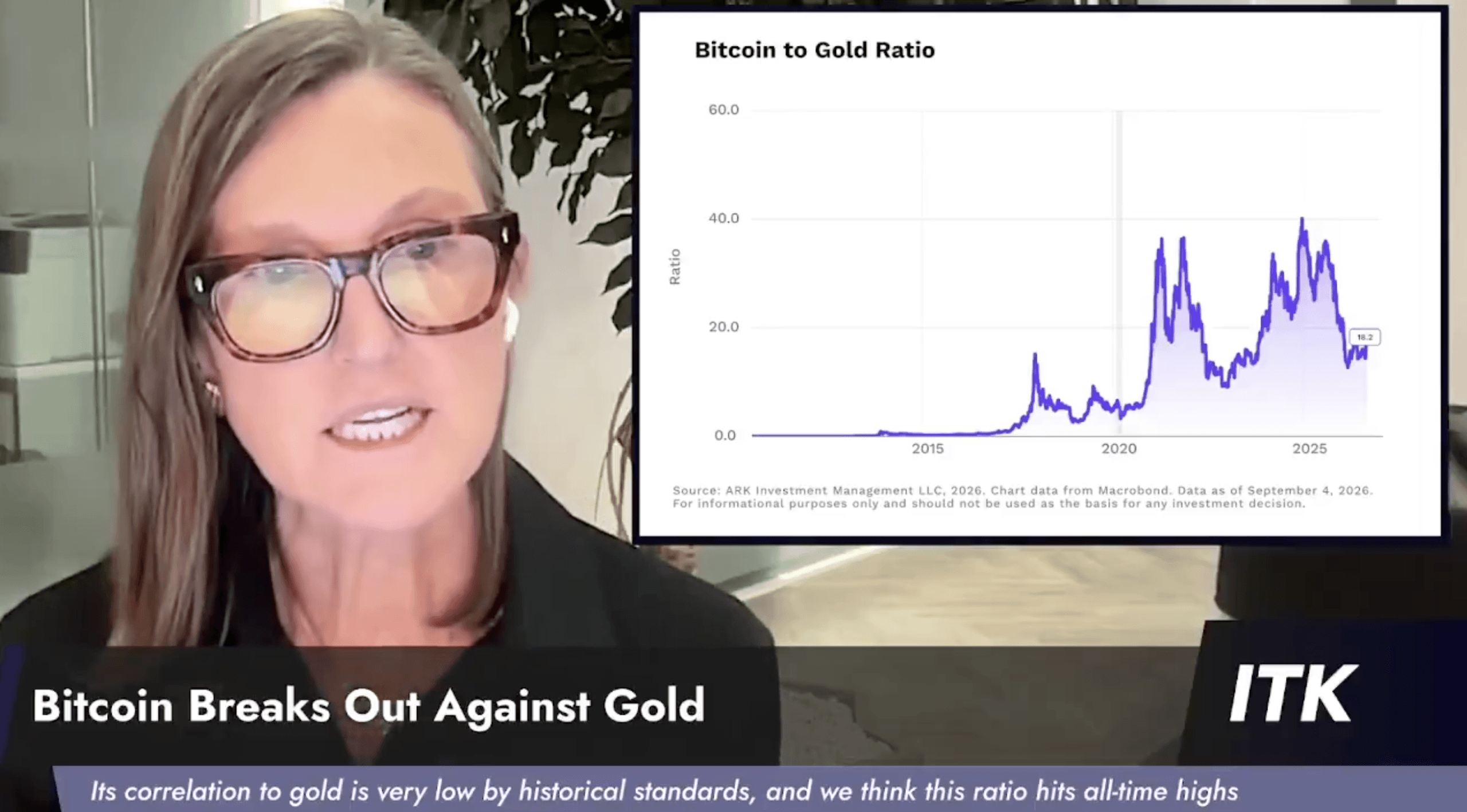
ARK Invest founder Cathie Wood highlighted bitcoin’s recent strength relative to gold, while stopping short of declaring the move definitive.
“This is promising, looks like a turn is in,” Wood said in an interview shared by Pete Rizzo on X. “It does look like a little bit of a breakthrough here.” She added that seeing bitcoin strengthen against gold was very reassuring for the firm as she remained firmly bullish on bitcoin’s longer-term role.
We’re big bulls on bitcoin. It’s a technology revolution, it’s a new global monetary system, and it’s the first of its kind in a new asset class.
She remarked that ARK believes bitcoin still has a long way to go because of those three characteristics. Wood also framed bitcoin and gold as potential insurance assets in a financial system facing technological disruption and counterparty risks.
Bitcoin’s $83,000 Test Could Decide What Comes Next
The correlation shift does not mean bitcoin’s price has escaped technical resistance.
Market commentator MandoCT argued that BTC is “joining the hard-asset trade while becoming less sensitive than gold to rising yields,” but warned that the $83,000 sell wall remains important.
That level could become the immediate test of whether the change in market behavior has real staying power.
A clean break above $83,000 could reinforce the argument that bitcoin is being repriced as an independent monetary asset. Failure there would leave the market vulnerable to another pullback despite the improving macro relationship. For crypto investors, the development matters because bitcoin’s identity may be changing again.
If BTC can trade more like gold while remaining less exposed to rising yields, bitcoin’s price could begin responding to fiscal stress and monetary uncertainty in ways that look increasingly different from traditional risk assets.




Other Articles

Ethereum targets quantum-resistant L1 by 2029

No Comment! Be the first one.