
A lot of the conversation around AI in healthcare focuses on diagnostics and drug discovery or on doctor-patient visits. But a less visible part of the system affects whether patients actually get seen at all, and it has less to do with the number of doctors in the world (too few) and more with the administrative work (too much) that happens between a primary care doctor writing a referral and a specialist’s office getting a patient on the schedule. That gap, it turns out, is huge, stubbornly manual, and increasingly attracting serious interest from venture capitalists.
Kaled Alhanafi, a former Lyft and Cruise executive, and Chetan Patel, who spent a decade building cardiac devices at Medtronic, co-founded Basata after each experienced the problem directly.
For Patel, the issue became personal when his wife fainted on a flight with their young children. Even with his deep knowledge of cardiology and the specific devices that could help her, he says navigating the administrative process to get her appropriate care took far longer than it should have. “We have the best doctors, we have some of the best medicines, but the care gap is just so wide,” he said.
Alhanafi describes a parallel experience with his own father, who was referred to three cardiology groups after a serious carotid artery diagnosis. According to Alhanafi, only one called back within a couple of weeks. Another responded after the surgery was already done. The third still hasn’t called.
These aren’t unusual outcomes, as nearly anyone who has tried to see a specialist in recent years can attest. Specialty practices that receive referrals are frequently processing hundreds or thousands of documents — most arriving by fax — with small administrative teams. Practices lose patients not because they don’t want to see them, the company argues, but because they can’t get through the intake backlog.
Basata, founded two years ago in Phoenix, is trying to fix this. When a referral comes in — still typically by fax, alas — Basata’s system reads and processes the document, extracts the relevant clinical information, and then an AI voice agent calls the patient directly to schedule the appointment.
Patients can also call the practice at any hour and reach an AI agent that can answer questions or handle common administrative needs like prescription renewals. Alhanafi says the company has recordings of patients audibly surprised by how quickly they’re contacted after a referral is sent. The goal, he says, is for a patient to have a scheduled appointment by the time they reach their car in the parking lot after seeing their primary care doctor.
Techcrunch event
San Francisco, CA
|
October 13-15, 2026
The company integrates with the electronic medical record systems that specific specialties actually use, which is why it says it has moved carefully — cardiology first, then urology — rather than trying to serve every corner of the market at once. The founders say they recently turned down a large deal in a specialty they haven’t yet mapped thoroughly enough to feel confident doing well.
The revenue model is usage-based: practices pay per document processed and per call handled, rather than per seat. The company says it has processed referrals for roughly 500,000 patients to date, with about 100,000 of those coming in the last month alone.
Basata says it has raised $24.5 million in total, including a new $21 million Series A round led by Lan Xuezhao of Basis Set Ventures, who began her career modeling the human brain as a PhD researcher before moving into corporate strategy at McKinsey and Dropbox and ultimately into investing. Cowboy Ventures, founded by Aileen Lee, also participated, as has Victoria Treyger, a former general partner at Felicis Ventures who more recently stood up her own venture firm, Sofeon (this is its first investment).
The space is getting crowded. Tennr, a New York-based startup founded in 2021, has raised over $160 million to date — including from Andreessen Horowitz, IVP, Lightspeed, and Google Ventures — and is now valued at $605 million. Tennr focuses heavily on document intelligence and has says it has built proprietary language models trained on tens of millions of medical documents. Assort Health, backed by Lightspeed, focuses on automating patient phone communication for specialty practices and last year raised at a $750 million valuation.
Lee said the founders’ years of experience are an asset in a space filling up with well-funded competitors. “There are a lot of [VCs] chasing around high school dropouts and college dropouts, but when you’re selling to medical practices, trust is a really big deal,” she said. “These doctors want to look you in the eye and know that they can count on you.”
Basata’s founders meanwhile argue that their differentiation lies in combining both capabilities into a single end-to-end workflow tailored to specific specialties instead of building a tool that handles just one part of the process. That may be harder to sustain as better-funded competitors expand, but there’s clearly a market signal here.
Of course, like many AI companies automating work that humans currently do, Basata will eventually face a harder question about where the line is between augmenting workers and displacing them. For now, the founders say the administrative staff they work with aren’t worried about that; they’re more worried about drowning. Indeed, Alhanafi notes that the administrative staff at specialty practices have often been in their roles for decades and know the work intimately; they’re also buried in volume that no reasonable number of hires could fully absorb.
Whether AI merely expands what these workers can do or gradually makes many of their functions unnecessary is a question that applies well beyond healthcare. For now, Basata’s pitch is the former: that freeing administrators from the most repetitive parts of the job makes them better at the rest of it. Judging by one stat shared by Alhanafi — that 70% of the company’s new deals now come through word of mouth — it seems the people closest to the problem find that argument convincing.
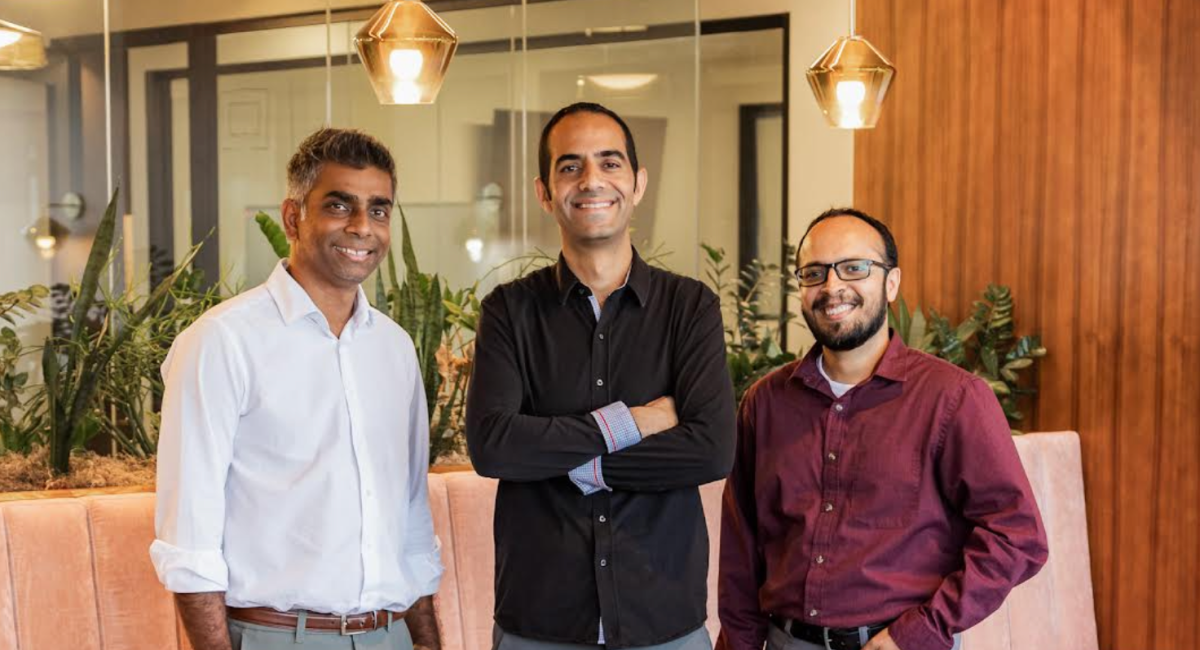
Pictured above, left to right: Chetan Patel, who is co-founder and president of Basata; Kaled Alhanafi, the company’s CEO; and Vivin Paliath, the company’s third co-founder and CTO.
When you purchase through links in our articles, we may earn a small commission. This doesn’t affect our editorial independence.

Other Articles


No Comment! Be the first one.